
Putting the Spotlight on the Motion Picture and Video Industry

By Lainey Stalnaker, Data Analytics Writer
When most people think of the movie industry, they probably imagine Hollywood or New York, but in recent years, filmmaking has expanded outside of its usual hubs, and South Carolina has benefited. In celebration of National Movie Night, which takes place on the second Friday of June each year, let’s take a look at how South Carolina’s motion picture and video industry has grown over the last decade.
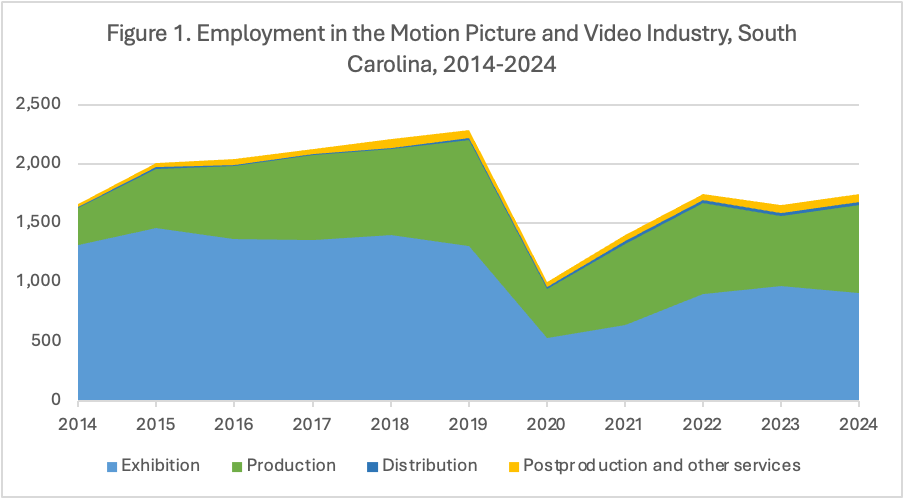
In 2024, the motion picture and video industry employed an average of 1,745 people, which was down from a peak of 2,283 in 2019, but up from a low of 1,000 in 2020 (due to COVID). This industry encompasses all phases of the movie-making process, from production to distribution to exhibition. In 2014, most of the jobs in the industry were in motion picture and video exhibition, i.e., movie theaters. In the last decade, however, the share of movie theater jobs in the industry has dropped from 79 percent to 52 percent. Many of the new jobs are in motion picture and video production, which includes the creation and marketing of movies, TV shows, music videos, cartoons, and other video content. Figure 1 shows employment since 2014.
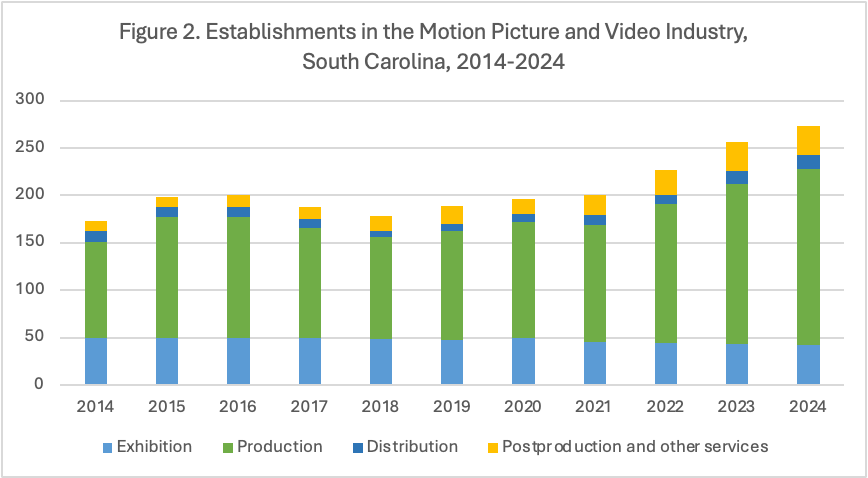
The number of motion picture and video exhibition establishments dropped slightly between 2014 and 2024, from 50 to 42. Meanwhile, production establishments increased from 101 to 186, making up the majority of motion picture and video establishments in the state, as shown in Figure 2.
- Data are sourced from the Bureau of Labor Statistics’ Quarterly Census of Employment and Wages.